

Blog
Wicker vs Rope vs Rattan: Which Outdoor Furniture Material Lasts Longest in Indian Weather?

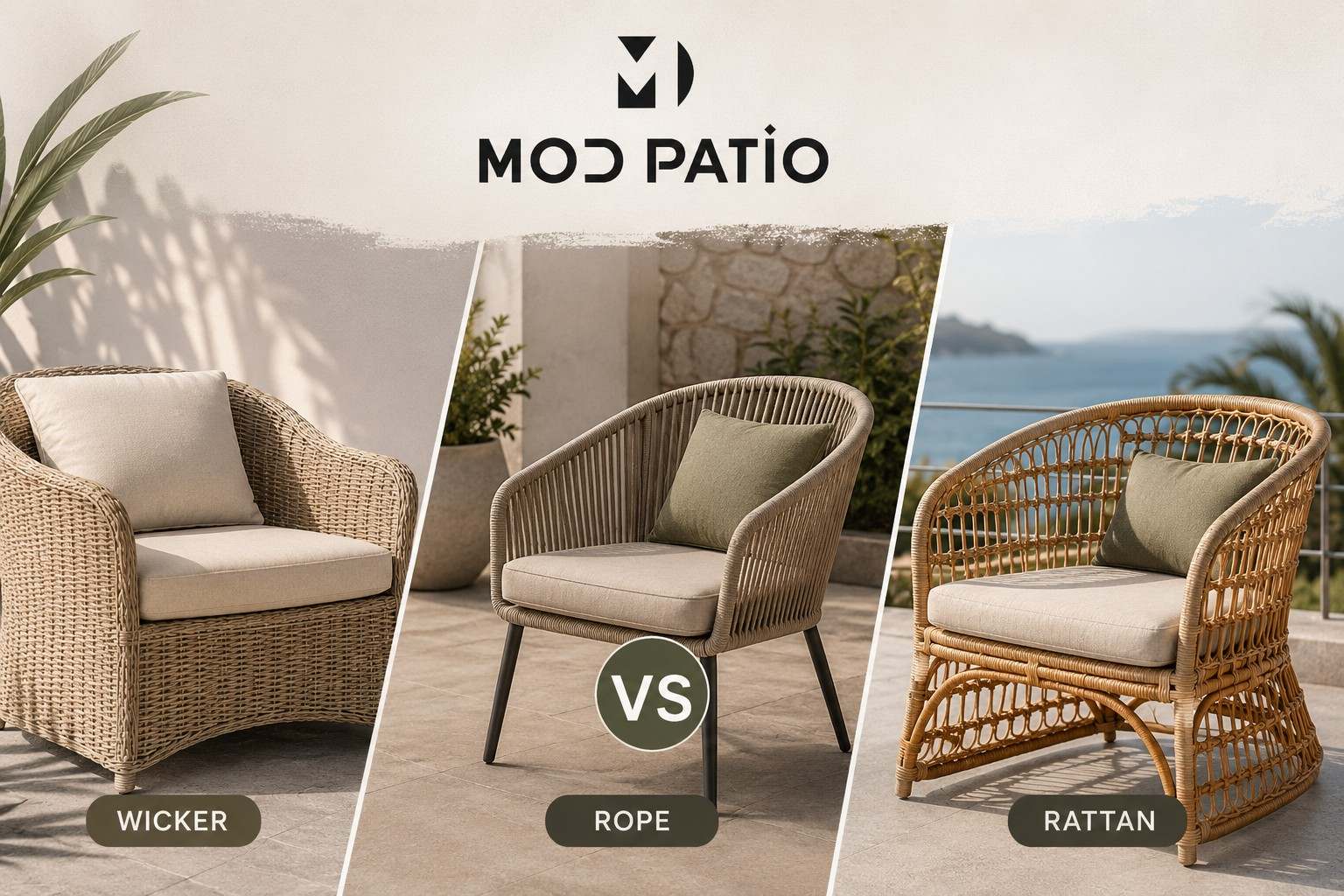
Wicker, rope and rattan get used almost interchangeably in furniture listings, but they behave very differently once exposed to Indian humidity, monsoon rain and peak summer sun. This guide breaks down what each material actually is, how each performs across India’s climate zones, and which one holds up best for hotels, resorts, restaurants and villas that need furniture to survive years of guest use.
For a hotel or resort procurement team, the choice of seating material isn’t a style decision, it’s a maintenance and replacement-cost decision. Furniture that looks identical on a product page can behave in completely different ways after one monsoon season outdoors. Some pieces swell, crack or grow mould within months. Others shrug off humidity for years with almost no upkeep.
That gap comes down to material. Before specifying furniture for a poolside deck, rooftop restaurant or resort lobby, it’s worth understanding what genuinely weatherproof outdoor furniture material looks like, and which of wicker, rope or rattan is actually built to last in Indian conditions.
Wicker, Rope and Rattan: What’s the Real Difference?
These three terms get used loosely across the outdoor furniture industry, which causes real confusion at the buying stage. Here’s what each one actually means:
- Rattan is a natural raw material, a solid vine harvested from palm species and traditionally woven into furniture. On its own, rattan is not weatherproof.
- Wicker isn’t a material at all, it’s a weaving technique. Traditional wicker was woven from natural rattan or cane. Modern outdoor wicker is almost always synthetic, made from UV-stabilised HDPE (high-density polyethylene) strands woven over a powder-coated aluminium frame.
- Rope refers to furniture built by winding marine-grade synthetic cord, typically polyester, olefin or acrylic-coated, around a metal frame. It’s a different construction method entirely, favoured for its clean, contemporary look.
In short: rattan is the traditional raw material, wicker is a weave style (natural or synthetic), and rope is a distinct modern technique. Only the synthetic versions of wicker and rope are genuinely suited to sustained outdoor use in India.
How Each Material Performs in Indian Weather
India’s climate doesn’t test furniture gently. Coastal humidity, months of monsoon rain, and intense UV exposure all hit outdoor seating at once, often in the same week. Here’s how the three compare:
| Material | Monsoon & Humidity Resistance | UV/Sun Resistance | Maintenance | Best Suited For |
| Natural Rattan | Poor – absorbs moisture, swells and cracks, prone to mould | Poor – dries out and discolours quickly | High – regular oiling, indoor storage recommended | Covered verandas and indoor-facing lounges only |
| Synthetic (HDPE) Wicker | Excellent – non-porous, doesn’t absorb water | Excellent – UV-stabilised, resists fading | Low – wipe clean, occasional rinse | Poolside decks, rooftop lounges, coastal properties |
| Synthetic Rope Weave | Excellent – open weave dries fastest, no water retention | Excellent – solution-dyed cords resist fading | Low – rinse and air-dry | Contemporary resort seating, high-exposure poolside areas |
The pattern is clear: once you move from natural rattan to a synthetic wicker or rope construction, weather resistance improves dramatically. The real decision for hospitality buyers is less “will it survive the monsoon” and more “which of the two genuinely weatherproof options suits the space.”
Why Natural Rattan Struggles Outdoors in India
Natural rattan has a warm, organic look that’s hard to replicate, but its performance outdoors in India is its biggest limitation. The cane fibres absorb ambient moisture during humid months, then dry out and contract once the weather turns, a cycle that leads to cracking, splitting and weakened joints. Add sustained monsoon exposure, and mould growth becomes a near-certainty without daily attention.
This is why natural rattan generally isn’t suitable for true outdoor placement in most parts of India, and works far better under a covered veranda or as indoor-facing furniture. For furniture that will sit on an open pool deck, rooftop or garden through the monsoon, a synthetic wicker or rope construction is the more realistic choice, an approach covered in more depth in our guide to weatherproof outdoor furniture for India’s rain and humidity.
Synthetic Wicker vs Rope: The Real Contest
With rattan largely ruled out for open-air use, the wicker vs rope outdoor furniture decision is the one that actually matters for most hospitality projects. Both are genuinely weatherproof, so the choice usually comes down to airflow, aesthetic and the space itself:
- Drying speed: Rope’s open weave lets water pass through and air circulate, so it dries faster after rain than the tighter wicker weave.
- Aesthetic: Wicker gives a fuller, warmer, more traditional look, closer to natural rattan. Rope reads as cleaner and more contemporary, which is why it features across many of our curated collections, including the rope-woven pieces in our Seaside Collection.
- Frame pairing: Both weaves are typically built over powder-coated aluminium, which resists rust far better than untreated steel in humid or coastal conditions.
- Guest-facing durability: Both hold up well under heavy daily use, though rope’s simpler construction tends to be easier to spot-repair if a section of weave is damaged.
For a closer look at how these materials show up across specific pieces, our breakdown of outdoor daybed vs sun lounger designs covers frame and weave choices in more detail.
Best Material by Hospitality Space
Different areas of a property put different demands on furniture:
- Pool decks and poolside furniture: Synthetic rope or HDPE wicker on aluminium frames, chosen for quick-drying performance under constant moisture exposure. See our Swimming Pool & Poolside Furniture range and our post on the top benefits of outdoor poolside furniture in India.
- Rooftop restaurants and cafes: Rope weave is often preferred here for wind resistance and fast drying between sudden showers, detailed further in our guide to outdoor furniture for rooftop restaurants.
- Resort lounges and villa terraces: HDPE wicker’s warmer look often suits lobby and lounge areas well. Our outdoor furniture ideas for hotels, resorts and luxury villas covers space-by-space selection in more depth.
- High-turnover dining areas: Either synthetic material works, provided the fabric and cushioning are equally weather-rated. Our guide to choosing outdoor dining furniture for hospitality spaces goes further into this.
Keeping Maintenance Low, Whichever You Choose
Even weatherproof materials benefit from a few habits that noticeably extend furniture life:
- Wipe down frames and weave after heavy monsoon spells rather than letting water sit
- Rinse cushions and let them air-dry rather than storing them damp
- Check joints and hardware periodically for corrosion, especially at coastal properties
- Rotate cushion positions occasionally to prevent uneven sun fading
Our full breakdown of low-maintenance outdoor furniture options goes deeper on this, and is especially useful for restaurant and cafe operators managing daily guest turnover.
The Frame Matters as Much as the Weave
A well-made wicker or rope weave on a poor frame will still fail early. When working through any outdoor furniture material guide, ask specifically about:
- Frame material – powder-coated aluminium or stainless steel resists corrosion far better than untreated mild steel
- Joint construction – welded joints generally outlast bolted ones under repeated guest use
- Weave density – a tighter, consistent weave holds its shape longer under daily seating pressure
It’s why our own collections are built around aluminium and stainless steel frames finished with synthetic wicker or rope weave, paired with non-toxic, 100% recyclable outdoor fibre, an approach we cover further in our approach to sustainable luxury outdoor furniture for hospitality.
Our Recommendation for Indian Hospitality Projects
So what’s the best outdoor furniture material for Indian weather? For any space with direct monsoon or sun exposure, synthetic wicker or rope will consistently outlast natural rattan, often by several years. Between the two, let the space decide: rope for high-airflow, contemporary-styled areas like pool decks and rooftops, and wicker where a warmer, more traditional look is the priority, such as lounges and villa terraces. Reserve natural rattan for covered, indoor-facing areas only.
If you’re specifying furniture across multiple spaces on one property, many hospitality clients simplify the decision by working with a single manufacturer who can match weave, frame and fabric consistently across the whole project, a point covered further in our outdoor furniture buying mistakes guide.
Talk to Mod Patio About Your Project
Mod Patio manufactures wicker and rope outdoor furniture in India specifically for hotels, resorts, restaurants and luxury villas, built on aluminium and stainless steel frames with non-toxic, recyclable outdoor fibre. Whether you’re furnishing a single rooftop or specifying seating across an entire resort, our design team can help match the right material to each space on your property. See why hotels, resorts and restaurants across India choose Mod Patio for their outdoor furniture.
Get in touch with the Mod Patio team to discuss material samples and custom collections for your next project.
Frequently Asked Questions
Is rope outdoor furniture more durable than wicker in Indian weather?
Both synthetic rope and synthetic HDPE wicker are genuinely weatherproof and perform similarly well in Indian conditions. Rope’s more open weave dries a little faster after rain, while wicker offers a denser, warmer look. Neither is meaningfully less durable than the other when built on a quality aluminium or stainless steel frame.
Can natural rattan furniture be used outdoors in India?
Not reliably. Natural rattan absorbs humidity, cracks as it dries out, and is prone to mould during the monsoon. It performs far better in covered or indoor-facing spaces than on an open pool deck or rooftop.
Which material is best for poolside or coastal hospitality properties?
Synthetic rope on an aluminium frame is generally the strongest choice for poolside and coastal use, since its open weave dries quickest and aluminium resists salt-air corrosion well. HDPE wicker performs almost as well and suits spaces wanting a warmer look.
How long does synthetic wicker or rope furniture typically last in commercial use?
With a quality frame and light regular maintenance, synthetic wicker and rope furniture perform well for years, even under the daily guest turnover typical of hotels, resorts and restaurants, considerably longer than natural rattan sees in the same conditions.
Does Mod Patio manufacture custom wicker or rope furniture for hotels and resorts?
Yes. Mod Patio designs and manufactures custom wicker and rope outdoor furniture for hospitality projects across India, from single-property orders to multi-site resort chains.Contact our team to discuss material options and collections for your space.