

Blog
What outdoor furniture holds up best in a high-traffic hotel pool area

Hotel pool decks put furniture through constant moisture, sun, chlorine, and heavy daily use most materials simply can’t keep up. This guide breaks down which materials actually hold up (aluminium, treated teak, UV-stable weave) and what to avoid when sourcing durable, commercial-grade poolside furniture.
A hotel pool deck takes more abuse than almost any other space on a property. Chlorine splashes, blazing sun, monsoon humidity, and dozens of guests moving loungers around every single day it’s a brutal combination, and most furniture simply isn’t built to survive it. If you’re sourcing hotel pool furniture for a busy property, the material and construction choices you make now will decide whether you’re replacing pieces every season or getting a decade out of them.
Here’s what actually holds up in high-traffic outdoor furniture settings, and what to avoid.
Why High-Traffic Pool Areas Are So Hard on Furniture
Before getting into materials, it helps to understand exactly what a hotel pool deck puts furniture through. If you’d rather skip the theory and browse ready options first, our Best Outdoor Furniture Options page is a good starting point.
- Constant moisture:- from pool splash, humidity, and monsoon rain, which causes rust, rot, and mould in weak materials
- Direct, sustained UV exposure:- which fades colour and breaks down fabric and plastic fibres over time
- Chlorine and chemical contact:- which corrodes untreated metal fittings and degrades certain fabrics faster than fresh water would
- Heavy daily use:- furniture gets dragged, sat on, and repositioned constantly by guests and housekeeping staff, unlike a quiet residential balcony
- Frequent cleaning:- commercial properties wash down furniture often, which means it needs to handle repeated contact with water and cleaning agents without warping or staining
Any durable outdoor furniture aimed at hospitality needs to be engineered around all five of these factors at once, not just one or two. For a broader look at why this matters beyond just pool decks, see the Benefits of Outdoor Poolside Furniture.
The Materials That Actually Hold Up
Powder-Coated or Marine-Grade Aluminium Frames
Aluminium is the backbone of most reliable commercial outdoor furniture today. Unlike mild steel or wrought iron, it doesn’t rust, and a proper powder-coated finish resists chipping and chemical exposure far better than painted alternatives. It’s also lightweight enough that staff can move and store pieces easily a real advantage for pool decks that get rearranged for events or reset every morning.
Treated Teak Wood
Properly seasoned and treated teak is one of the few woods that naturally resists moisture and pests, making it suitable for poolside use without constant oiling or resealing. It ages well, developing a silvery patina rather than warping or cracking, and it brings a warmth that pure metal or synthetic pieces can’t match a reason many resorts still specify teak dining sets and loungers for their pool areas. Browsing a few Outdoor Furniture Ideas is a useful way to see how teak pairs with other materials in a finished pool deck layout.
UV-Stable Rope and Wicker Weave
Synthetic rope wicker, when woven from UV-stabilised fibres, holds colour and shape far longer than natural wicker or untreated synthetics. It’s non-porous, so it doesn’t absorb pool water or trap moisture the way natural rattan does, and a tight, even weave resists sagging even with continuous daily use.
Quick-Dry Foam and Solution-Dyed Fabric
Cushions and upholstery are usually the first thing to fail on poolside furniture but reticulated, quick-dry foam lets water pass straight through instead of pooling inside and turning sour. Paired with solution-dyed acrylic fabric (which holds colour under UV rather than fading within a season), this combination is what separates genuinely weatherproof outdoor furniture from pieces that look fine in a showroom but fall apart outdoors within a year. This is also where a lot of buyers go wrong our guide to Outdoor Furniture Buying Mistakes Indian Customers Should Avoid covers foam and fabric mistakes specifically.
What to Avoid on a High-Traffic Pool Deck
- Mild steel or untreated metal :- will rust within a season of chlorine and monsoon exposure
- Untreated natural wicker or rattan:- absorbs moisture and breaks down quickly in humid, wet conditions
- Low-grade or non-UV-stabilised fabric:- fades and weakens fast under direct sun
- Furniture with exposed screws or fixings:- a common point of corrosion and guest injury risk in commercial settings
A Buyer’s Checklist for Sourcing Poolside Furniture
Whether you’re furnishing a new resort or replacing worn-out pieces, a few questions will tell you a lot before you commit to an order:
- Does the frame use powder-coated or marine-grade aluminium, or properly treated teak not mild steel or untreated wood?
- Is the fabric solution-dyed and UV-stable, and is the foam quick-dry/reticulated?
- What’s the load rating, and is it tested for commercial (not just residential) use?
- Does the manufacturer offer a real warranty, and do they support repairs or reweaving later?
- Can the pieces be customised in size and finish to match your property’s existing look?
If you’d rather keep upkeep simple, it’s worth reviewing Low-Maintenance Outdoor Furniture options alongside this checklist.
Which Pieces of Furniture Matter Most on a Pool Deck
Not every piece takes the same amount of punishment, so it helps to know where to invest in the best materials and where standard-grade construction is acceptable.
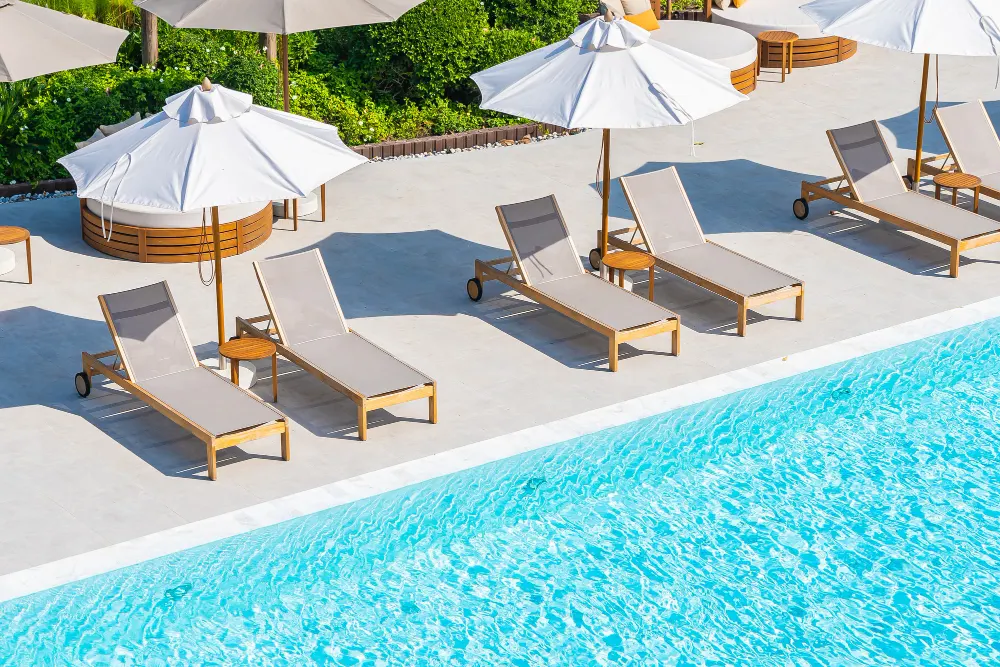
Sunloungers:- see the heaviest daily use of any piece on a pool deck. Guests sit, recline, and drag them across tiles multiple times a day. This is where frame strength matters most; an outdoor lounger built on powder-coated aluminium with a properly reinforced hinge mechanism will outlast a lighter, budget frame by years.
Dining and lounge seating:- near the pool bar or shaded areas takes slightly less direct water exposure but still needs UV-stable fabric and rust-proof fixings, since it’s usually left outdoors around the clock rather than stored away.
Side tables:- are lightweight and easy to replace individually, but they still need a weatherproof top untreated wood or low-grade laminate swells and discolours quickly with repeated contact with wet glasses and sunscreen bottles.
Umbrellas and shade structures:- face constant wind load in addition to sun and rain, so the pole and canopy fabric need to be rated for outdoor commercial use, not just a residential-grade umbrella repurposed for a hotel.
Getting the material right on each of these categories individually, rather than assuming one finish works for the whole pool deck, is often what separates furniture that lasts a decade from furniture that needs replacing within two years.
Why Sourcing from an Indian Manufacturer Helps
Furniture built and tested for Indian conditions, real monsoon humidity, real summer heat, real chlorine exposure tends to outperform imported pieces designed for milder climates. It also means faster delivery, easier bulk reordering, and support that doesn’t disappear after the sale. Best Poolside Furniture Manufacturer in India options like Mod Patio are built specifically around this brief non-toxic, recyclable materials engineered for commercial hospitality use, with custom finishes available so a resort or hotel isn’t stuck with a generic catalogue set.
Final Thoughts
The furniture that survives a hotel pool deck isn’t necessarily the most expensive-looking option it’s the one engineered for moisture, sun, chemicals, and daily wear all at once. Powder-coated aluminium, treated teak, UV-stable weave, and quick-dry foam and fabric are the combination worth insisting on, whatever the finish or style you choose.
If you’re planning a pool furniture project, it’s worth browsing Poolside Furniture for Commercial Spaces before finalising an order.
Frequently Asked Questions
How long should good hotel pool furniture last?
With the right materials powder-coated aluminium, treated teak, and UV-stable fabric commercial-grade poolside furniture should reasonably last 8–10 years or more under regular hospitality use, compared to just a season or two for low-grade alternatives.
Is wood or aluminium better for a pool deck?
Both work well when properly treated. Aluminium is lighter, rust-proof, and easier for staff to move daily, while treated teak brings warmth and a natural look that many resorts prefer for dining and lounge areas. Many properties use a mix of both across different furniture categories.
Does furniture really need to be “commercial-grade” rather than residential?
Yes. Residential furniture is built around occasional use by one household, while a hotel pool deck sees dozens of guests daily, along with frequent cleaning and repositioning. Commercial-grade construction accounts for that load and wear from the start.