

Blog
Where to Place an Outdoor Electric Fireplace: Ideas for Resorts, Rooftop Bars and Villas

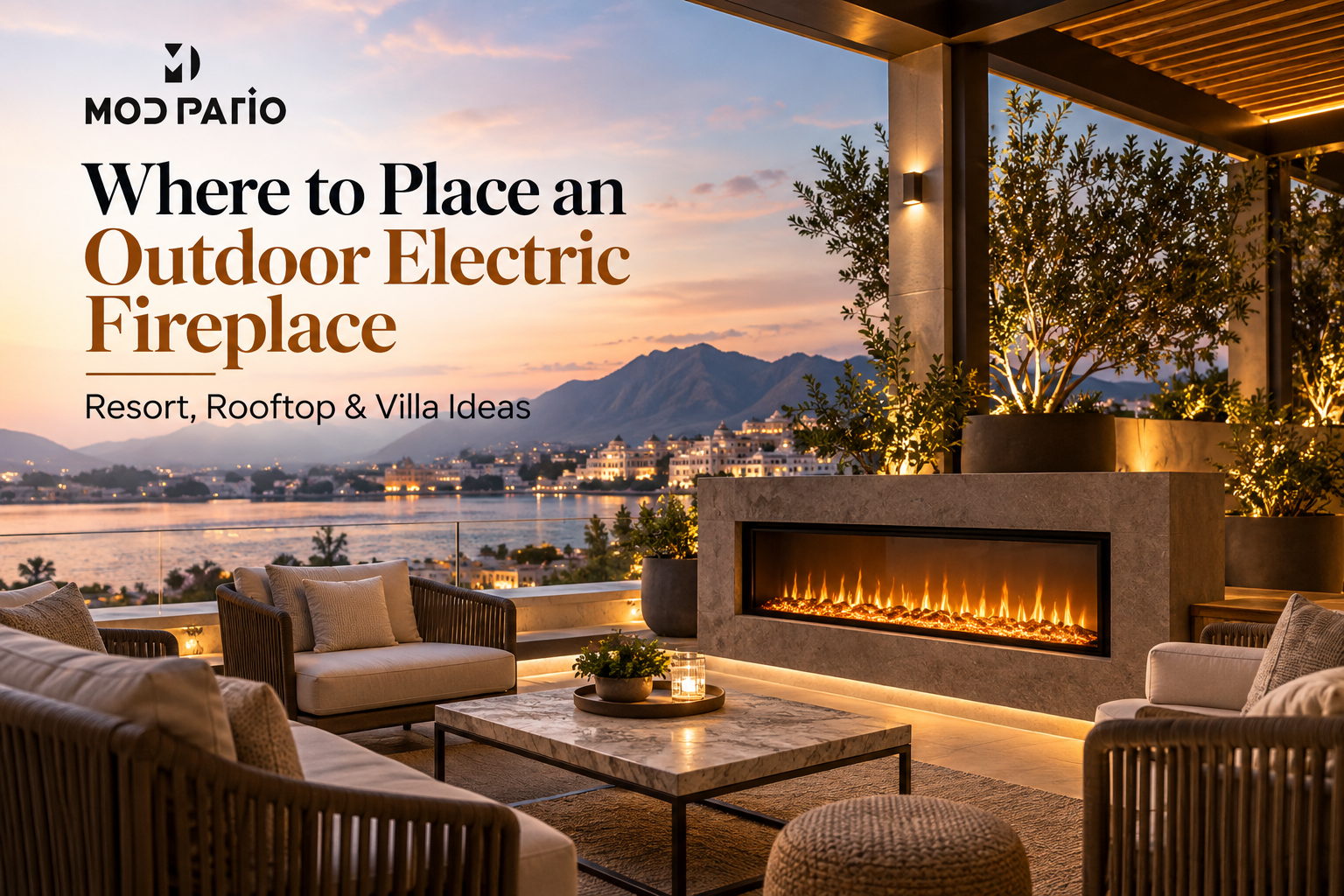
The short answer: an outdoor electric fireplace works best wherever people already sit for a while, near a lounge seating cluster, along a wind-sheltered edge, and close enough to a power point that installation doesn’t need extra wiring work. Beyond that, the right spot depends on the kind of property. Here’s how placement plays out differently across resorts, rooftop bars and villas.
Why Placement Still Matters for Electric Fireplaces
Electric fireplaces skip the chimney, ash and open-flame concerns of a wood or gas fireplace, which opens up placement options a traditional fireplace can’t use, under a covered pergola, against a wall, or in a corner with no ventilation gap. But a few things still decide whether the spot works:
- Power access. Unlike a portable fire pit, an electric fireplace needs a nearby, weatherproof power point.
- Weather exposure. Even IP-rated models do better with some cover from direct monsoon rain, even if they’re not damaged by light exposure.
- Wind. Doesn’t affect the flame the way it would a real fire, but still matters for how comfortable the surrounding seating is.
- Sightlines. A fireplace works as a focal point only if seating is actually arranged to face it.
Placement Ideas for Resorts
Resorts usually have the most placement options, since there’s more open space to work with and multiple distinct guest zones to furnish.
Poolside lounge corner. A fireplace at one end of a pool deck, away from splash zones, extends how late guests stay out after the pool closes for the evening. Pair it with furniture from a poolside and swimming pool furniture range so the whole corner reads as one considered seating area rather than an afterthought.
Garden or courtyard centrepiece. A freestanding fireplace at the centre of a lawn or courtyard, surrounded by a loose circle of chairs, works well for resorts that want a communal evening gathering spot rather than several small clusters.
Covered gazebo or pergola. For resorts in higher-rainfall regions, placing the fireplace under a covered structure means it can stay out and usable through more of the monsoon season, without needing to be moved indoors.
Restaurant or dining terrace edge. Along the perimeter of an open-air dining terrace, a fireplace at one or two ends keeps outdoor dining comfortable into the evening without heating the whole space.
Placement Ideas for Rooftop Bars
Rooftop spaces come with a different set of constraints, mainly wind and limited floor area, so placement tends to be more deliberate.
Against the parapet wall. Positioning fireplaces along the perimeter, rather than in the open middle of the roof, gives some natural wind shelter and keeps the centre of the space free for movement.
Bar-adjacent lounge zone. A fireplace near (but not directly beside) the bar counter creates a natural “stay a while longer” pocket, separate from the main walkway traffic.
Corner nooks. Rooftop layouts often have underused corners; a fireplace with two or three chairs tucked into a corner turns dead space into one of the more requested seating spots on the roof.
A rooftop is also where checking the fireplace’s wind rating and cord routing matters more than almost anywhere else, loose cabling on an exposed roof is both a safety issue and a maintenance headache.
Placement Ideas for Villas
Villas usually need fewer fireplaces but more flexibility in how each one fits a smaller footprint.
Private terrace or balcony. A compact, wall-mounted or slim freestanding fireplace works well where floor space is limited but the owner still wants an evening focal point.
Poolside deck. Similar logic to a resort pool deck, just at residential scale, a fireplace near loungers or a daybed extends how the pool area gets used after dark.
Garden reading or lounge nook. A single fireplace paired with one or two armchairs, away from the main garden path, makes for a quieter, more private spot than a large open lawn setup.
General Rules for Placing Any Outdoor Electric Fireplace
| Factor | What to check |
| Distance from seating | Close enough to feel the warmth, typically 4 to 6 feet, without seating backing directly onto the unit |
| Power source | A dedicated, weatherproof outlet nearby avoids visible extension cords |
| Weather exposure | Some cover (a roof, pergola or overhang) extends the usable season and reduces maintenance |
| Wind exposure | Doesn’t affect the flame, but strongly affects guest comfort in open or rooftop spaces |
| Surface stability | A level, solid base matters more for freestanding units than people expect |
| Sightlines | Seating should be arranged to actually face the fireplace, not just be near it |
Frequently Asked Questions
Can an outdoor electric fireplace be placed under a covered patio?
Yes. Since there’s no smoke or open flame, electric fireplaces work well under pergolas, gazebos and covered terraces where a wood or gas fireplace would need proper ventilation.
Do electric fireplaces need a chimney or ventilation?
No. This is one of the main advantages over wood or gas fireplaces, and it’s what allows placement in corners, against walls or under covered structures.
How far should an electric fireplace be from seating?
Around 4 to 6 feet usually balances feeling the warmth with comfortable seating distance, though this varies by the specific unit’s heat output.
Is a rooftop a good spot for an outdoor electric fireplace?
Yes, with some care around wind exposure and cable routing. Placing the unit against a parapet wall rather than in an open, exposed area usually works best.